
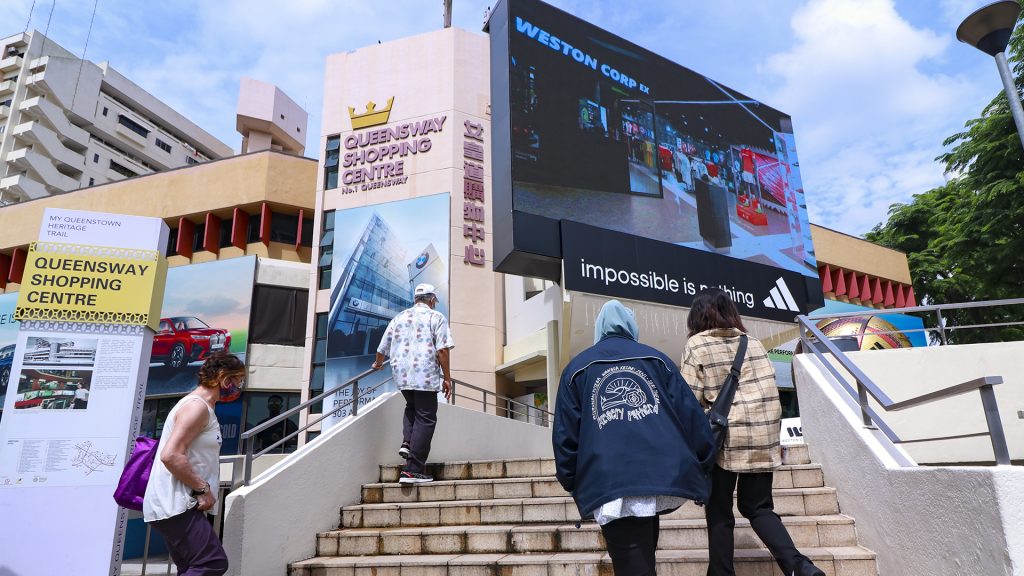
Creative Outdoor Advertising Glossary of Terms (2026 Edition) is a comprehensive reference designed to equip brand owners, heads of marketing, and business decision makers with a clear understanding of the most relevant industry terms shaping modern advertising. Covering everything from foundational marketing concepts to advanced OOH, programmatic DOOH, data analytics, ESG standards, and B2B media strategy, this guide simplifies complex terminology into practical, strategic insights. Built for the 2026 media landscape, it helps professionals align vocabulary with execution, improve cross-team communication, evaluate media investments with confidence, and make data-driven decisions in an increasingly performance-focused advertising ecosystem.
A – Advertising Fundamentals & Audience Strategy
Above-the-Line (ATL)
ATL refers to mass media advertising channels such as billboards, television, and radio. OOH is traditionally categorized as ATL because it delivers broad, non-targeted exposure at scale.
Account-Based Marketing (ABM)
ABM is a B2B strategy that focuses on targeting specific high-value accounts rather than a broad audience. OOH placements near central business districts strengthen ABM visibility and executive reach.
Ad Inventory
Ad inventory represents all available advertising spaces across static and digital formats. Premium OOH inventory in Tier-1 Southeast Asian cities commands higher demand and pricing.
Ad Frequency
Ad frequency measures how often an audience sees an advertisement within a given period. Optimal repetition increases brand recall without causing fatigue.
Ad Impression
An impression is a single instance of potential exposure to an advertisement. In DOOH, impressions are modeled using traffic and mobility data.
Ad Recall
Ad recall measures how well audiences remember an advertisement after exposure. Large-format billboards and minimal messaging improve recall performance.
Attribution
Attribution identifies which marketing touchpoints contribute to conversion. DOOH increasingly integrates mobile and search-lift attribution modeling.
Attribution Rate
Attribution rate indicates how much campaign activity can be linked to measurable outcomes. Advanced mobile data improves OOH attribution confidence.
Audience Measurement
Audience measurement evaluates estimated reach, frequency, and demographic exposure. In Southeast Asia, measurement often combines traffic census and mobile data.
Ad Viewability
Ad viewability measures whether an advertisement had the opportunity to be seen. In DOOH, viewability considers dwell time and traffic speed.
Addressable Advertising
Addressable advertising delivers tailored content to specific audience segments. Programmatic DOOH enables contextual addressability.
AI Optimization
AI optimization uses machine learning to improve media placement and pricing. It maximizes inventory yield in digital billboard networks.
ARPU (Average Revenue Per User)
ARPU calculates revenue generated per customer. OOH strengthens premium positioning, which may increase ARPU.
AC (Agency Commission)
A fee that an advertising agency charges a client for the services it provides. This is usually a percentage of the costs the agency incurs in the process of providing the services.
Ad Retention
Ad retention measures the number of consumers who remember seeing an ad or a brand being advertised on an out-of-home display. High retention indicates effective creative and placement.
Ad-Size
The height and width of an out-of-home display or billboard. Ad size impacts visibility, cost, and strategic placement.
All-in
The price includes government license & permit fees, production costs, and the media rate. This simplifies budgeting and ensures all campaign costs are covered.
Alternative Media
Types of OOH formats that do not fall into billboards, street furniture, or transit media. Most alternative media is used to create customized solutions for advertisers seeking unique engagement.
Airport Media
The advertising mediums available in an airport and around or outside the area near the airport. Airport media offers high-value audience targeting, especially for business travelers and tourists.
Ambient Advertising
The practice of placing ads on unusual items or in unusual places you wouldn’t normally see or think of. It can be found anywhere, inside or outside of a building, creating memorable brand experiences.
AR (Augmented Reality)
A technology that superimposes a computer-generated image on a user’s view of the real world, providing a composite view. AR in OOH can enhance engagement and interactivity.
Audience
Any viewers that reflect the most desired consumer prospects for a product or service, defined by age, sex, race, ethnicity, income, or geographic combinations. Knowing your audience is key for strategic media planning.
Awareness
A measurement of knowledge of the existence of a brand or product or its advertising by the audience. Awareness is measured spontaneously by surveys or prompted by specific cues.
Allotment
The number of units required to achieve a desired GRP level in a market. Proper allotment ensures sufficient reach and frequency for campaign objectives.
Approach
The distance measured along the line of travel from the point where an advertising unit first becomes fully visible to the point where the copy is no longer readable. Approach determines effective viewing time and placement strategy.
B – Branding, Brand Equity & B2B Growth Strategy
B2B (Business-to-Business)
B2B refers to commercial transactions between businesses. OOH near industrial estates and financial districts supports B2B brand authority.
B2C (Business-to-Consumer)
B2C describes businesses selling directly to consumers. High-traffic urban corridors amplify B2C awareness campaigns.
B2G (Business-to-Government)
B2G involves transactions between businesses and government institutions. Airport and official transit OOH sites often support B2G branding efforts.
B2B2C
B2B2C is a model where a business sells through another business to reach end consumers. OOH campaigns can strengthen visibility across both business layers.
D2C (Direct-to-Consumer)
D2C brands bypass intermediaries and sell directly to customers. OOH builds mass credibility for emerging D2C brands entering new markets.
Brand Awareness
Brand awareness measures how familiar consumers are with a brand. Large-scale OOH dramatically accelerates awareness in metropolitan areas.
Brand Recall
Brand recall measures the ability to remember a brand without prompts. Repetition and high-contrast visuals strengthen recall.
Brand Salience
Brand salience reflects how quickly a brand comes to mind in buying situations. Dominating a corridor increases mental availability.
Brand Loyalty
Brand loyalty indicates repeat purchasing behavior and long-term brand preference. Consistent OOH visibility reinforces trust and stability.
Brand Equity
Brand equity represents the perceived value of a brand beyond its functional benefits. Premium billboard presence elevates perceived equity.
Business Model Canvas
A strategic framework outlining value proposition, revenue streams, and customer segments. OOH companies use it to structure asset monetization.
Brand Architecture
Brand architecture defines how multiple brands relate within a portfolio. Large OOH networks often operate multi-tier product offerings.
Brand Lift Study
A brand lift study measures changes in awareness or perception after a campaign. DOOH increasingly integrates survey-based brand lift analysis.
Balanced Scorecard
Balanced scorecard is a strategic performance framework covering financial, customer, internal process, and learning metrics. OOH enterprises use it to balance growth with compliance.
Back-lit Lightbox
A type of outdoor display where the printed display is illuminated by a light from the back in order to make the visual visible at night or for higher visibility. Back-lit lightboxes enhance nighttime exposure and improve brand visibility.
Banner
A printed display of any materials bearing an advertisement, logo, slogan, or other message that is hung and displayed outdoors or by the side of a building. Banners are versatile and cost-effective for temporary promotions.
BCA Advertising License
A license approved by the Building and Construction Authority (a Singapore government ministry) to permit the display of a billboard or LED screen outdoors in Singapore. This license ensures legal compliance for outdoor advertising campaigns.
Billboard
Large digital or static format advertising displays intended for viewing from extended distances, generally more than 50 feet, especially at the side of a road. Billboards are ideal for high-reach campaigns targeting mass audiences.
Bleed
A display area that extends beyond the live copy area of a print or video, often to the edge of the finished size or panel frame. Bleeds help prevent unintended borders and ensure full-coverage visuals.
Bus or Taxi Wrap
The marketing practice of completely or partially covering a vehicle in an advertisement or livery. This process turns a vehicle essentially into a mobile billboard, offering high mobility and local reach.
Brand Recall
Refers to the extent to which the audience is able to recall or recognise a brand. High brand recall indicates successful campaign impact and audience engagement.
Brand Awareness
Refers to the extent to which the audience is able to recall or recognise a brand. Building awareness is a fundamental goal of most OOH advertising campaigns.
Brand Consideration
Refers to the likelihood that a customer will favour one brand over another. Effective advertising and messaging can positively influence brand consideration.
Brand Recognition
The extent to which a consumer can correctly identify a particular product or service just by viewing the product or service’s logo, tagline, packaging, or advertising campaign. Strong brand recognition increases trust and purchase intent.
Brand Perception
A special result of a consumer’s experiences with a brand. Brand perception influences loyalty, purchase decisions, and overall market positioning.
Buying Flexibility
Traditional OOH media normally has fixed two-week periods where advertising can be booked in specified packs. Buying flexibility identifies ways the sales company allows the media to be bought, for example, by time of day, offering more strategic planning.
Bulletin
The largest standardized OOH format, typically measuring 14’ x 48’ in overall size. Sold either as permanent displays or in rotary packages, bulletins maximize visibility for long-distance audiences.
Bus Shelter
A curbside structure located at regular stopping points along urban bus routes. Bus shelters provide high dwell-time exposure and are ideal for reaching commuters.
C – Campaign Planning, Conversion Metrics & Cost Efficiency
CPM (Cost Per Mille)
CPM calculates cost per 1,000 impressions. It is widely used in OOH and DOOH media planning.
C2B (Consumer-to-Business)
C2B refers to individuals offering products or services to companies. Influencer-led DOOH campaigns represent hybrid C2B ecosystems.
CPC (Cost Per Click)
CPC measures digital click cost. While OOH does not generate clicks directly, it improves downstream CPC efficiency.
CPA (Cost Per Acquisition)
CPA calculates cost per converted customer. Integrated OOH reduces CPA by strengthening upper-funnel performance.
CPL (Cost Per Lead)
CPL measures cost per generated lead. OOH strengthens pre-conversion credibility.
Cost Per Incremental Visit (CPIV)
CPIV calculates the cost required to generate one additional store visit. This metric is increasingly used in retail DOOH campaigns.
CapEx (Capital Expenditure)
CapEx represents investment in infrastructure such as LED screens. High CapEx is typical in digital network expansion.
Conversion Rate
Conversion rate represents the percentage of completed desired actions. OOH improves conversion indirectly via trust building.
Cross-Channel Marketing
Cross-channel marketing integrates multiple platforms for consistent messaging. OOH enhances omnichannel synergy.
Customer Journey
Customer journey maps awareness to purchase stages. OOH dominates early awareness touchpoints.
Customer Acquisition Cost (CAC)
CAC measures total cost required to acquire one customer. Effective OOH campaigns can lower blended CAC across channels.
Cost Efficiency Ratio
Measures output performance relative to investment. High-impact OOH often delivers strong cost efficiency at scale.
Capital Expenditure (CapEx)
CapEx refers to long-term infrastructure investment. Digital LED billboard deployment requires high CapEx but yields long-term revenue.
Commercial Zoning
Commercial zoning regulates where billboards may legally operate. Compliance affects asset scalability.
Conversion Lift
Conversion lift measures incremental conversions driven by advertising exposure. Hybrid OOH-digital campaigns enable measurable lift.
Captive Audience
A group of people who listen to or watch someone or something because they cannot leave. Captive audiences are valuable for advertisers since engagement is nearly guaranteed.
Coverage
Also known as coverage area, it represents the boundaries of a market exposed to an OOH or outdoor advertising campaign as defined by geographic parameters. Coverage can also be the percent of the population within these areas that can be reached by the total outdoor advertising or billboard inventory of a media operator.
Copy
Copy is the content, artwork, or advertising displayed on an outdoor billboard unit or other out-of-home (OOH) structure. The quality of the ad’s creative design can impact the number of people who notice it.
Copy Area
The viewing area on an OOH unit. A well-designed copy area ensures legibility and effective message delivery to the audience.
Color-Proof
A process where the client chooses from a list of different variations of a printed sample of the advertisement for outdoor placement (Original, +10%, -10%). Color-proofing ensures visual consistency and brand integrity.
Campaign
A planned set of activities and promotional effort that is based on the same strategy and creative idea, carried out over a period of time. Campaigns help maintain consistent messaging and maximize audience impact.
Cycle
The length of time that an outdoor campaign is in situ for. Understanding the cycle helps in planning frequency and timing for maximum effectiveness.
Cancellation Period
A specified period of time when a contract can be terminated. This provides flexibility for advertisers in case of strategic or budgetary changes.
Circulation
A measurement of traffic volume in a market. Circulation estimates the number of people with an opportunity to see an out-of-home display but is no longer considered a credible measure of actual OOH audience compared to modern metrics.
CPP (Cost Per Rating Point)
The cost of advertising exposure opportunities that equals one rating point in any geographically defined market. CPP helps advertisers compare costs across different media channels.
Cross-Read
An advertising display that is visible across traffic lanes on the opposite side of the roadway. Cross-read locations increase visibility and impression potential for OOH campaigns.
D – Digital Out-of-Home (DOOH) & Data-Driven Advertising
DOOH (Digital Out-of-Home)
DOOH refers to digital outdoor displays capable of dynamic content. It allows time-based and data-triggered messaging.
Programmatic DOOH (pDOOH)
pDOOH enables automated real-time media buying. It increases flexibility and targeting precision.
Dynamic Creative Optimization (DCO)
DCO adjusts creative content based on data inputs such as time or weather. It enhances contextual relevance.
Demand Generation
Demand generation focuses on creating market interest and awareness. OOH plays a dominant role in generating macro demand.
Data Analytics
Data analytics evaluates campaign performance using metrics and modeling. It improves ROI transparency in DOOH.
Digital Twin Mapping
Digital twin mapping models real-world traffic flows using data simulation. It enhances DOOH site optimization.
Dwell Time
Dwell time measures how long an audience remains within viewing distance. Higher dwell time improves message retention.
Data Management Platform (DMP)
DMP aggregates audience data for targeting. It enhances programmatic DOOH audience segmentation.
Digital Screen Loop
A digital screen loop refers to the sequence and duration of ads rotating on a DOOH display. Shorter loops increase frequency per advertiser.
Siap! Berikut versi revisi dengan menghilangkan “Dwell Time” dan “Digital Out of Home (DOOH)”, tetap pakai Heading 3:
Daily Impressions
Also known as daily effective circulation (DEC), it is the average number of passers-by or persons (18+ years) in cars or other vehicles that could potentially be exposed to an advertising display or billboard for either 12 hours (unilluminated – 6:00am to 6:00pm) or 18 hours (illuminated – 6:00am to 12:00 midnight) on an average day. Daily impressions help advertisers estimate potential audience reach.
Day-Part
A term used when buying media space for television, radio, and LED digital display; it refers to the time division in a typical broadcast day by different media in order to offer slots and media presence to various advertisers. Day-parting optimizes exposure to target audiences at relevant times.
Demographic
Also known as target audience, it represents the demographic profile of people or consumers intended for an outdoor billboard advertisement. Defined by age, sex, race, ethnicity, income, lifestyle, brand/media consumption, interests, or purchase behavior, demographics help tailor campaigns for maximum relevance.
Direct Client
Someone you sell to directly, or a client that has a past working history with you or someone you are close to. Direct clients often offer more streamlined communications and faster decision-making.
Digital Billboard
A digital billboard displays digital images and short clips that are changed by a computer every few seconds. Digital billboards are primarily used for advertising but can also serve public service purposes, offering dynamic messaging and high flexibility.
Display Period
The interval of time or exposure when an out-of-home (OOH) advertising campaign is run and viewed. Display period impacts audience reach and campaign effectiveness.
Directional Sign
Any sign or graphic display used primarily to provide information about the location of possible destinations. Directional signs help guide audiences while offering subtle advertising opportunities.
Distribution
The strategic placement of OOH units across a market or geographic area. Distribution of units impacts the reach of the campaign and the demographic profile of the audience delivered to.
DP (Dynamic Poster)
An electronic poster able to display full motion video. Primarily located where people are on the move, DP engages audiences with dynamic, attention-grabbing content.
Duration
The amount of time that an OOH display panel of a given size can, from its moment of visibility, stay within the audience’s vision. Duration affects message comprehension and effectiveness.
Dynamic
The process of building responsive creative that delivers contextually relevant messages driven by the smart use of data across DOOH. Dynamic campaigns enhance personalization and audience interaction.
Daily Effective Circulation (DECs)
The historical OOH audience measurement system. DECs are the average number of persons, in cars or other vehicles, passing and potentially exposed to an advertising display. DECs help plan campaign reach but are now complemented by modern measurement methods.
E – Engagement, Exposure & Effective Reach Measurement
Engagement Rate
Engagement rate measures audience interaction levels. DOOH supports QR-based or mobile-driven engagement.
Experiential Marketing
Experiential marketing creates immersive brand interactions. 3D anamorphic LED billboards are rising across Southeast Asia.
Earned Media
Earned media refers to unpaid exposure from social sharing. Iconic OOH installations often generate viral amplification.
Exposure
Exposure represents the opportunity for an audience to see an ad. High traffic density increases exposure probability.
Enterprise Marketing
Enterprise marketing focuses on large-scale organizations and multi-region campaigns. OOH supports enterprise-level geographic dominance.
Ecosystem Marketing
Ecosystem marketing integrates partners, suppliers, and distributors into a cohesive brand strategy. OOH builds ecosystem credibility.
Effective CPM (eCPM)
eCPM standardizes revenue performance across inventory types. It allows comparison between static OOH and DOOH.
EBITDA (Earnings Before Interest, Taxes, Depreciation, and Amortization)
EBITDA measures operational profitability. It is widely used in OOH company valuation.
Emerging Media
New, innovative, and interactive technology utilized to share ideas and communicate with others in OOH advertising. Emerging media enhances engagement and allows for creative, tech-driven campaigns.
Exposure
Exposure is the measure of actual eye contact with an out-of-home (OOH) media unit or billboard structure. Exposure represents reasonable opportunities for outdoor advertising to be seen and read.
Eyelet
A small round hole in an advertising banner or cloth for threading lace, string, or rope through. Eyelets facilitate secure installation and durability of banners in outdoor conditions.
Effective Reach
The number of persons within the target audience exposed to the advertising schedule an average of three or more times. Effective reach ensures that messaging has a sufficient frequency to impact audience behavior.
Embellishment
Letters, figures, mechanical devices, or lighting that are attached to the face of an OOH unit to create a special effect. Embellishments enhance visibility and make the advertisement more memorable.
Extension
An area of copy made as a cut-out that falls outside the basic restraints of a bulletin or poster. Extensions increase creative space and add dynamic visual interest to OOH units.
F – Frequency Strategy & Full-Funnel Marketing Approach
Frequency
Frequency measures repeated exposure within a timeframe. Balanced frequency improves memorability.
Footfall
Footfall measures pedestrian movement near retail areas. Mall-based DOOH depends heavily on footfall data.
Funnel Marketing
Funnel marketing categorizes awareness, consideration, and conversion stages. OOH is strongest at the top-of-funnel stage.
Fixed Placement
Fixed placement guarantees exclusive positioning. It increases the share of voice dominance.
Forecast Modeling
Forecast modeling predicts campaign performance using historical data. It supports strategic OOH budgeting.
Floor Price
Floor price represents the minimum cost per ad slot in programmatic auctions. Premium DOOH networks maintain higher floor pricing.
Fill Rate
Fill rate represents the proportion of digital screen inventory occupied by paid ads. AI-driven yield management improves fill rate.
FA (Final Artwork)
The final artwork that will be used for printing of the placement and also the color-proof. FA ensures the creative is ready for production and meets client specifications.
Face
The surface area on an OOH unit, billboard, or display where an advertising copy is displayed. An OOH structure may have more than one face, allowing for multiple messages or directions.
First Come, First Serve
A term where whoever is the first to approach will get the offer first, or a group of people or things will be dealt with in the order in which they arrive. This principle is commonly used in media bookings and inventory allocation.
Front-Lit Lightbox
A type of outdoor display where the printed display is illuminated by a light from the front to make the visual visible at night or for higher visibility. Front-lit lightboxes improve nighttime readability and brand exposure.
Finishing
The method used to hem the edges of posters and bulletins. Finishing can include welded pockets or other operational techniques for hanging substrates onto billboard units. Proper finishing ensures durability and neat presentation.
Flighting
The length of an advertising campaign, sometimes divided into distinct segments over the course of weeks. Flighting allows advertisers to optimize timing and audience engagement while managing budget effectively.
G – GRP, Geo-Targeting & Growth Optimization
GRP (Gross Rating Point)
GRP measures total campaign weight across reach and frequency. It is commonly used in large-scale OOH planning.
Geofencing
Geofencing targets mobile users within a defined area. It bridges OOH exposure and mobile retargeting.
Growth Strategy
Growth strategy defines scalable expansion plans. OOH supports geographic expansion across ASEAN markets.
Geo-Targeting
Geo-targeting focuses on advertising based on specific geographic data. DOOH enhances localized messaging precision.
Government Relations (GR)
GR manages relationships with regulators and municipalities. It is critical in billboard licensing across Southeast Asia.
Geographic Penetration Index
Measures brand strength relative to population size in a region. OOH accelerates penetration in emerging ASEAN cities.
GST (Goods and Services Tax)
Abbreviation in Singapore, GST is a broad-based value-added tax levied by the Singapore government on import of goods, as well as nearly all supplies of goods and services. Other countries have similar taxes, known as VAT, SST (Malaysia), PPN (Indonesia), etc.
GRP (Gross Rating Point)
The total number of impressions delivered by an OOH campaign expressed as a percentage of a target audience. GRP helps advertisers quantify campaign reach and evaluate media efficiency.
Gross Impressions
The sum of impressions registered against a target audience based on a GRP level of days or weeks in a schedule. Gross impressions measure total audience exposure across a campaign.
Geopath OOH Ratings
The Geopath ratings system provides OOH advertising with credible metrics comparable to other measured media. It uses sophisticated research incorporating circulation, visibility, eye tracking, demography, trip modeling, and integrated reach and frequency models to measure audiences who actually see OOH ads throughout the country.
H – Hyperlocal Targeting & High-Impact OOH Formats
Heatmap
Heatmap visualizes traffic concentration areas. It guides premium OOH site selection.
Hyperlocal Targeting
Hyperlocal targeting focuses on small geographic zones. DOOH excels in retail activation campaigns.
High-Impact Creative
High-impact creative uses bold, simple visuals for fast readability. It is critical for roadside billboards.
High-Impact Format
High-impact format refers to oversized or 3D billboard structures. These generate strong earned media.
Hybrid Campaign
Hybrid campaigns integrate static OOH with digital retargeting. This model increases measurable ROI.
High Traffic Area
A location that is well-trodden, frequented by many people or vehicles, busy with traffic of many cars and pedestrians. High traffic areas offer maximum visibility and higher potential impressions for OOH campaigns.
Head-On Display
A display or billboard that passers-by or motorists will face directly and cannot be missed. Head-on displays are effective for capturing immediate attention and maximizing engagement.
HD (High Definition)
A format that provides a resolution substantially higher than that of a standard digital screen. HD enhances clarity and visual impact for digital billboards and displays.
I – Impressions, Inventory Management & Integrated Campaigns
Impression Multiplier Effect
Impression multiplier effect occurs when OOH drives additional digital engagement. It boosts search volume and online traffic.
Integrated Marketing
Integrated marketing aligns messaging across all platforms. OOH strengthens offline-online consistency.
Inventory Yield
Inventory yield measures revenue generated per advertising asset. AI-driven pricing optimizes DOOH networks.
Investment ROI
Investment ROI measures total return from media expenditure. DOOH attribution improves confidence in ROI calculations.
Impression Multiplier
Occurs when OOH exposure drives online engagement. It amplifies digital performance metrics.
Inventory Utilization Rate
Measures the percentage of available ad slots sold. High utilization reflects strong demand and effective sales strategy.
Illumination
The action of supplying or brightening a poster with light from above or behind, to make it look brighter and more visible. Illumination increases readability and attracts more attention in low-light conditions.
Impacts
The number of times that an OOH campaign or advertisement is seen or recognized. Impacts help measure campaign effectiveness and audience engagement.
Impressions
The average number of persons who are likely to notice an ad on an OOH display or billboard. Impressions are a key metric for evaluating reach and exposure.
Inspection Reports
A weekly or monthly report given to clients after site visits to their display site, including photos or records taken and sent to the client at regular intervals. Inspection reports ensure campaign compliance and quality control.
Intensity
Often called brightness, intensity is measured in the LED industry in candelas per square meter, also referred to as nits. Higher intensity improves visibility and legibility of digital displays.
Internal
Faces that have no external viewing opportunity are classified as internal (e.g., shopping center, airport terminal, etc.). Internal displays target captive audiences within controlled environments.
Inventory
The collection of assets owned by an OOH media company. Inventory represents all available advertising spaces for booking and campaign planning.
Impact Delivery
The sum of impacts across a schedule of faces. Impact delivery is commonly used as a measure of the total audience delivered by an OOH campaign.
Impressions Multiplier
The impression multiplier is a value greater than zero (but can be less than one) passed on through the bid request by an exchange to signify the audience impression count – or potential number of viewers – for that particular opportunity or request. Impression multipliers are measured in different ways by vendors and help estimate total campaign reach.
J – Joint Ventures & Strategic Media Partnerships
Joint Venture (JV)
A joint venture is a partnership between companies for asset expansion. Many ASEAN OOH networks expand through JV agreements.
Junior Poster
A standardized poster format, typically measuring 6’ x 12’, formally known as an 8 Sheet. Junior posters are ideal for high-visibility placements in urban areas with moderate traffic.
K – Key Performance Indicators (KPIs) in Modern Advertising
KPI (Key Performance Indicator)
KPI is a measurable value used to evaluate campaign or business success. In OOH and DOOH, KPIs often include reach, frequency, impression volume, and traffic uplift.
KRA (Key Result Area)
KRA defines the critical areas where performance must be achieved to fulfill strategic objectives. For OOH operators, KRAs may include revenue growth, inventory utilization, and regulatory compliance.
Keder
A type of finishing that is attached to fabric to create a continuous waterproof connection between fabric and frame. Keder gives the banner remarkable strength and ease of fitting, allowing you to lock soft signage and banners into place. This system creates a tight, strong, and sleek finished look.
L – Location Intelligence, Lead Generation & Lifetime Value
Location-Based Advertising
Location-based advertising delivers ads using geographic triggers. DOOH integrates mobility analytics for optimization.
Lifetime Value (LTV)
LTV estimates total customer revenue over their lifecycle. Strong brand awareness increases LTV.
Lead Nurturing
Lead nurturing builds relationships with prospects over time. OOH supports early trust formation.
LED Billboard Infrastructure
Refers to physical hardware, power systems, and structural engineering of digital boards. Infrastructure quality affects longevity and brightness performance.
Location Intelligence
Location intelligence uses geographic data analytics for planning. It enhances OOH site valuation.
Large Format Billboard
Refers to an imaging format of an outdoor display that is big or has large dimensions. Large format billboards are ideal for high-impact campaigns and long-distance visibility.
Landscape
A viewing format in horizontal orientation. Landscape formats are commonly used for billboards and posters to match roadways or pedestrian lines of sight.
LCD (Liquid Crystal Display)
Screens capable of displaying high-quality images with sufficient brightness even in areas with high levels of ambient light. LCDs are used for indoor and some outdoor advertising displays.
LED Digital Screen
A flat panel display that uses an array of Light-Emitting Diodes (LEDs) as pixels for a video display. Their brightness allows them to be used outdoors where they are visible in sunlight for store signs and billboards.
Lightbox
A flat box having a side of translucent glass or plastic and containing an electric light, providing evenly lighted illumination to an advertisement on the other side. Lightboxes enhance nighttime visibility and clarity.
License & Permit Fees
A license approved by the government of a country to permit the display of a billboard or LED screen outdoors in that country. These fees ensure compliance with local regulations.
Loop
Digital content that repeats itself at regular intervals on an LED digital screen. The editorial content may change per loop, but ads remain the same, allowing repeated exposure.
Lifestyle/Retail
Out-of-home media used to create customized advertising programs targeting specific consumer audiences. This includes arenas, stadiums, digital networks, health clubs, restaurants, bars, and exterior placements such as airborne, marine, resorts, and leisure locations.
Likelihood to See (LTS)
The portion of the OTS (Opportunity to See) audience who are likely to see an ad. LTS replaces traditional DECs in measuring commercial audiences for more accurate audience targeting.
Line of Sight
The simultaneous viewing of more than one OOH unit. Line of sight considerations help optimize billboard placement and campaign effectiveness.
Location List
A listing of all locations and displays included in a specific OOH program. Location lists assist advertisers in planning and evaluating campaign coverage.
Lithography
A popular printing method for producing large quantities of posters in full color. Lithography ensures high-quality, vibrant output suitable for outdoor campaigns.
Longitudinal Survey
A list of OOH spaces supplied to buyers describing the location of all units sold. Longitudinal surveys help buyers assess inventory availability and plan campaigns efficiently.
Look-Alike Targeting
Targeting audiences that share attributes with an audience of interest. For example, targeting “look-alikes” of past purchasers based on demographic or behavioral characteristics helps expand reach to potential new customers.
Luminance
The amount of visible light leaving a point on a surface in a given direction, measured in candela per square meter (cd/m²). In video applications, luminance represents the degree of brightness at any given point in the image, affecting clarity and visual impact.
M – Media Planning, Media Buying & Marketing Mix Strategy
Media Mix
Media mix refers to the allocation of budget across channels. OOH remains essential for mass awareness.
Market Penetration
Market penetration measures brand reach within a region. OOH accelerates urban penetration in Southeast Asia.
Mobile Retargeting
Mobile retargeting reconnects users exposed to OOH campaigns. It strengthens attribution clarity.
Market Share
Market share measures percentage dominance in an industry. Large-format OOH networks compete on inventory share.
Media Inflation
Media inflation reflects rising ad costs due to demand. Prime ASEAN corridors experience media inflation.
Mall-Scape Advertising
Large forms of advertising such as large format LED screens or billboards that can be seen in or outside a mall. Mall-scape advertising captures high footfall and enhances brand visibility in shopping environments.
Mall Displays
Backlit advertising structures located at strategic points in shopping malls, usually two- or three-sided. Mall displays are effective for targeting captive audiences in high-traffic retail areas.
Mapping
A method of representing categories of current or potential customers for a product or service based on demographics, geography, and other factors. Mapping can also show product positioning and identify strategic areas for market penetration or expansion.
Minimum Booking
The minimum period that a client can book a location or site for OOH advertising. Minimum booking ensures availability and proper planning for campaign execution.
Media Rate
Standard advertising rates for different types of advertising media, such as billboards, online ads, and newspaper inserts. Media rates help advertisers budget and compare costs across channels.
Media Buy
The act of purchasing advertising from a media company such as a television station, newspaper, magazine, OOH display, blog, or website. Media buying includes negotiation for price, placement, and research into the best venues for ad placement.
Media Planning
The process of identifying and selecting media outlets (mainly newspapers, magazines, websites, TV, radio stations, and outdoor placements) in which to place paid advertisements. Media planning ensures strategic allocation of advertising budgets for maximum reach.
Media Coverage
Refers to all OOH displays, video content, or other digital content (produced by individuals or organizations outside your company) where your brand, products, or services are discussed or shown. Media coverage enhances brand visibility and reputation.
Media Owner
Individuals, groups, or business entities that own a medium of mass communication, such as radio, television, newspapers, magazines, and the Internet, which reach or influence people widely. Media owners control access to advertising inventory.
Media Agency
A company that provides advice to companies on how and where to advertise, and how to present a positive image to the public. Services include advertising, public relations, and other forms of media management.
Media Mix
The combination of advertising channels and mass communication mediums, such as radio, television, newspapers, magazines, OOH, and the Internet, used in the promotion of a product or service. A balanced media mix maximizes audience reach and engagement.
Multi-Sensory Experience
Sensory branding is a form of advertising that appeals to all the senses of an individual in relation to a brand. OOH campaigns can incorporate sound, touch, taste, and smell alongside visuals to enhance audience engagement.
Market
Geographically defined areas used to buy and sell media. Standard market definitions include DMAs and CBSAs. Markets help advertisers plan and allocate campaigns efficiently.
Market Ride
The physical inspection of the units that comprise an out-of-home program in a market, either pre-buy or post-buy. Market rides ensure compliance, placement accuracy, and quality control.
Message Duration
The interval of time when a digital OOH advertising message is viewed. Message duration affects recall and effectiveness of digital campaigns.
Mobile Billboard
A truck equipped with one or more poster panel units. The truck can either be parked at specified venues or driven around designated localities, turning vehicles into moving advertising platforms.
N – Network Coverage & Next-Generation Digital Screens
Network Coverage
Network coverage indicates the total geographic footprint of a media owner. Broad coverage increases campaign scalability.
Network Penetration Rate
Measures percentage of target urban areas covered by a media network. High penetration improves national campaign scalability.
Non-Skippable Media
Non-skippable media cannot be ignored or blocked. OOH is inherently non-skippable.
Neon Signs
Electric signs lighted by long luminous gas-discharge tubes that contain rarefied neon or other gases, which glow in colors. Neon signs are widely used for OOH displays and signage to attract attention and enhance visibility.
Neon Spectacular
Large advertising structures of varying sizes, generally located high on major buildings, in the CBD, or on major arterial roadways. While often used for product branding, they are more generally used for corporate or building identification.
NFC (Near Field Communication)
A short-range wireless technology that can transmit small amounts of data to a smartphone. NFC enables interactive OOH campaigns, such as contactless engagement or mobile-based offers.
Non-Illuminated Panel
A standard poster panel that is not equipped with illumination. Non-illuminated panels are typically used for daytime visibility or in locations where lighting is unnecessary.
Notice
The percentage of respondents who claimed to have noticed a screen. Notice measures the effectiveness of an OOH display in capturing audience attention.
O – Out-of-Home (OOH) Advertising & Omnichannel Integration
OTS (Opportunity To See)
OTS measures potential ad exposure. It is foundational in OOH planning metrics.
OOH (Out-of-Home)
OOH refers to advertising formats placed in public environments. It is a non-skippable, high-visibility medium.
Out-of-Home Attribution
Measures real-world impact of billboard campaigns. Mobile data integration strengthens attribution modeling.
OKR (Objectives and Key Results)
OKR is a goal-setting framework combining ambitious objectives with measurable key results. Media networks use OKRs to align expansion targets with performance outcomes.
Occupancy Rate (Static OOH)
Occupancy rate measures how many billboard units are sold versus available. It directly impacts revenue stability.
OpEx (Operational Expenditure)
OpEx includes maintenance, electricity, licensing, and staff costs. Efficient OpEx management increases margin sustainability.
One Time Production
A one-time only production of an outdoor display or billboard. This is used for campaigns or special events that do not require repeated production.
OTS (Opportunity To See)
A measure in advertising media denoting the number of times a viewer is most likely to see the advertisement. OTS helps evaluate potential audience exposure for campaigns.
Outdoor Media
A term primarily associated with billboards, street furniture, transit, and alternative media, referring to any media that carries advertising messages to consumers outside the home. Outdoor media delivers high visibility and broad reach.
Off-Premise Sign
A sign that advertises products or services not sold, produced, manufactured, or furnished on the property where the sign is located. Off-premise signs typically capture attention for businesses or brands at a distance from the point of sale.
On-Premise Sign
A sign that advertises products or services that are sold, produced, manufactured, or furnished on the property where the sign is located. On-premise signs inform and attract local customers directly at the point of business.
P – Programmatic DOOH & Performance Branding
Programmatic Advertising
Programmatic advertising automates digital media buying. It increases efficiency and flexibility.
Premium Inventory
Premium inventory refers to high-traffic, high-visibility sites. These command premium pricing.
Positioning
Positioning defines brand perception in the market. OOH reinforces premium positioning through scale.
Private Marketplace (PMP)
A PMP is an invite-only programmatic environment. Premium DOOH inventory is often sold via PMP deals.
Performance Branding
Performance branding combines brand awareness with measurable conversion impact. OOH increasingly supports this hybrid objective.
Performance Matrix
Performance matrix compares KPIs across regions or asset types. It helps identify underperforming billboard clusters.
Panel
An alternative name for a poster site. Panels are standardized advertising spaces used for displaying posters or promotional content.
Permit & License Fees
Official fees required by the government or local authorities to legally display advertisements outdoors. These fees ensure compliance with regulations and legal permissions.
Performance
The evaluation of a campaign’s achievements or effectiveness after the event. Performance is often measured in terms of coverage, impressions, or audience engagement.
Period
The duration of an advertising campaign. Period helps plan media allocation and scheduling for optimal impact.
Pillar Wrap
A type of display where a large concrete pillar or a pillar of a building is transformed into advertising space by wrapping it with a printed sticker sheet or mounted displays. Pillar wraps maximize visibility in high-traffic areas.
POS (Point Of Sale)
Also known as Point of Purchase, this is the time and place where a customer executes payment for goods and services. POS displays are used to influence last-minute purchase decisions.
Poster
A large printed picture, photograph, or notice that is stuck or pinned to a wall or board, usually for decoration or advertising purposes. Posters are versatile and widely used in various advertising campaigns.
Posting Date
The date when an advertising billboard is set up or when a digital LED screen display program is scheduled to commence. Posting dates are essential for campaign timing and reporting.
Posting Instructions
Detailed directions provided to a media company by an advertiser or agency, assigning specific copy to specific locations. Posting instructions ensure accurate and consistent ad placement.
Portrait
A viewing format in vertical orientation. Portrait formats are commonly used for narrow billboard panels or mobile advertising spaces.
Pedestrian Count
A recording or count of pedestrians passing a given point along a road, location, or path. Pedestrian counts are used to verify traffic circulation and estimate impressions for outdoor ads.
Production Timeline
The timetable for the use of resources and processes required to produce a billboard or advertising display. A production timeline ensures campaigns are delivered on schedule.
Proof Of Posting
A series of photos of a site taken and sent to the client as evidence that the purchased display or billboard has been installed. Proof of posting verifies campaign execution.
Proximity
Describes how near something is to another thing or what’s nearby. Proximity helps advertisers determine strategic placement relative to other points of interest or target audiences.
Q – QR Code Activation & Campaign Optimization
Quarterly Media Review
Quarterly evaluation of campaign effectiveness. Large brands conduct regular OOH performance reviews.
QR Code (Quick Response Code)
A type of 2D barcode that contains a matrix of dots. It can be scanned using a QR scanner or a smartphone with a built-in camera, allowing the user to quickly access more information about a product, service, or advertisement.
R – Reach, ROI, ROAS & Revenue Attribution
Reach
Reach measures unique audience size. Nationwide OOH maximizes mass reach.
ROAS (Return on Ad Spend)
ROAS evaluates revenue generated per ad dollar spent. DOOH attribution improves transparency.
ROI (Return on Investment)
ROI measures profitability relative to investment. In OOH, ROI is often evaluated through brand lift and sales correlation.
ROMI (Return on Marketing Investment)
ROMI measures incremental revenue driven by marketing activities. It provides a broader strategic lens than ROAS.
Retail Activation
Retail activation drives store visits and foot traffic. OOH near malls strengthens local impact.
Revenue Per Screen
Measures income generated per digital display asset. It reflects asset productivity.
Retail Media Network
Retail media networks monetize in-store digital screens. It overlaps with DOOH ecosystem expansion.
Rate Card
A document containing prices and descriptions for the various ad placement options available from a media outlet. Like a hotel rack rate, it generally represents the maximum price an advertiser may pay.
Reach
The approximate percentage of a target audience’s population potentially exposed to an outdoor billboard or ad at least once during a specified period. Reach is usually measured over a four-week campaign period to assess audience coverage.
Reach Curves
A graph detailing the reach of a proposal or campaign. Reach curves help advertisers visualize audience penetration and plan frequency strategies.
Recency Theory
The idea that advertising messages sell to those consumers who are ready to buy. Recency theory emphasizes timing and frequency to influence purchasing decisions effectively.
Reposting Charge
An additional charge incurred for posting a change of design before the expiration of a display period. Reposting charges cover the costs of labor, materials, and updated placement.
Retargeting
Targeting audiences defined by recently showing interest in the advertiser, most often through website visits or store interactions. Retargeting improves campaign efficiency by focusing on warm or engaged audiences.
Rotation
The process of moving an advertiser’s message from one location to another at stated intervals to achieve more balanced coverage of a market. Rotation ensures equal exposure across multiple sites.
Run-Ons or Extras
Extra posters sent to plant operators to replace those damaged during the display period. The number of posters printed for renewal purposes typically varies from 10%–20% of the total order.
S – Share of Voice, Smart Billboards & Sustainable Advertising
Share of Voice (SOV)
SOV measures brand visibility versus competitors. Corridor domination increases competitive SOV.
Search Lift
Search lift measures increased online queries after exposure. DOOH often generates measurable uplift.
Sustainability
Sustainability refers to environmentally responsible practices. Solar-powered LED boards support ESG goals.
Smart City Integration
Smart city integration aligns DOOH with urban digital infrastructure. Southeast Asia is rapidly adopting this model.
Smart Billboard
Smart billboards integrate sensors, cameras, and AI triggers. They enable contextual advertising.
Sustainability Index
Measures environmental compliance of media assets. ESG-aligned brands prefer green-certified networks.
SLA (Service Level Agreement)
SLA defines the performance standards between media owner and advertiser. In DOOH, SLA may include uptime percentage, screen brightness standards, and reporting transparency.
SLO (Service Level Objective)
SLO is a specific measurable target within an SLA. For example, maintaining 99% digital screen uptime per month.
Share of Market (SOM)
SOM measures a brand’s percentage of total market sales. Increased SOV often correlates with increased SOM.
SAC (Special Agency Commission)
A fee that an advertising agency charges to a client they are close to or have a past working history with for the services provided. This is usually a percentage of the costs the agency incurs in delivering the campaign.
Solus
A term indicating the position of an advertising billboard or display that is separated from other competing advertisements. Solus placements provide exclusive visibility and reduce distractions from competitors.
Spots
Advertising space in traditional media, such as television, radio, or LED displays. Spots typically range in length, commonly 30 seconds or 60 seconds, and are scheduled within a media plan.
Start Date
The date when a campaign is scheduled to commence. Static billboard campaigns require lead time for production and installation, whereas digital billboards allow more flexibility with electronic content delivery.
Sticker
A printed advertisement or visual with an adhesive layer on the non-printed side, allowing it to be stuck to a wall or surface. Stickers are versatile and often used for temporary or guerrilla campaigns.
Street Furniture
Advertising displays placed along sidewalks, including bus shelters, telephone kiosks, benches, and related street equipment. Street furniture reaches pedestrians and drivers at close range.
Street Liner
Smaller banner poster sites located on both sides of single-deck buses at eye level. Ideal for reaching drivers and pedestrians with frequent exposure.
Subject To Availability
Indicates that an establishment may have availability at the time of inquiry but is not obliged to hold the offer. Other clients may confirm bookings first, making the quote no longer valid.
Screen
An advertising display capable of rendering digital content. Screens are used for dynamic campaigns and allow rapid content updates for maximum engagement.
Single Sheet Poster
A poster constructed as a single, continuous substrate, typically made from thermoplastic polymers. Single sheet posters are recyclable and commonly used for standard billboard placements.
Snipe
An adhesive strip used to cover a portion of copy displayed on an advertising unit. Snipes are often applied to remove outdated or incorrect information.
Spectacular
A bulletin usually larger than 14’ x 48’, positioned at a prime location in a market. Spectaculars often utilize special embellishments to maximize visual impact and audience attention.
Substrate
A wide variety of materials used to produce advertising displays. Billboard substrates are typically made from thermoplastic polymers or PVC, while street furniture and transit substrates may use Fasson, paper, or film.
T – Target Audience Strategy, TRP & Transit Media
Target Market
Target market defines intended customer segments. ASEAN markets require demographic and cultural segmentation.
Transit Media
Transit media includes airport, bus, MRT, and rail placements. Rapid urbanization increases transit OOH value.
Traffic Density
Traffic density measures vehicle volume in an area. Higher density increases exposure value.
Traffic Index Score
Measures vehicle or pedestrian flow density at a specific site. High index scores increase media rate value.
Time-Based Targeting
Ads rotate based on time-of-day audience profiles. Morning and evening segments differ significantly.
Transit-Oriented Development (TOD)
Urban planning model integrating commercial zones around transit hubs. TOD increases high-value OOH inventory opportunities.
Tri-Vision
Also called a three-message sign, a Tri-Vision billboard consists of triangular prisms placed inside a frame. The prisms rotate 120°, each showing a new advertisement or informational message, allowing three individual images or messages to be displayed sequentially.
Traffic Count
A recording or count of vehicular traffic passing a given point along a road, highway, or intersection. Traffic counts are used to verify circulation and estimate impressions for outdoor advertising structures or billboards.
Transit Media
A form of advertising that displays messages on or inside vehicles, such as buses, taxis, or trains. Transit media ensures mobility and exposure to audiences along routes and stops.
Transition
A visual effect used on digital screen displays to change from one message to another. Transitions enhance the visual appeal and clarity of multiple messages in rotation.
Target Audience
Any audience reflecting the most desired consumer prospects for a product or service, defined by age, sex, race, ethnicity, income, or combinations of these factors for any geographic definition. Target audience data guides media placement and messaging strategies.
Target Rating Points (TRPs)
The total number of in-market impressions from a target audience delivered by a campaign, expressed as a percentage of the market population. TRPs measure campaign effectiveness within a defined audience segment.
Trim Size
The dimensions of an advertisement substrate once it has been prepared for placement onto a billboard or display unit. Trim size ensures proper fit and visual alignment with the media structure.
Traffic Flow
A graphic presentation of traffic volume across streets, arteries, or highways, indicated by line widths proportional to the amount of traffic. Traffic flow maps help advertisers plan optimal placement for maximum visibility.
U – Urban Media Strategy & User Journey Mapping
Urban Density Index
Measures population concentration in metropolitan zones. High-density cities increase OOH effectiveness.
Unit
Any outdoor advertising display. Units serve as the physical medium for conveying messages to the audience.
Ubiquity
Omnipresent; everywhere at the same time. Ubiquity in advertising refers to maximum visibility and repeated exposure across multiple locations or media.
Universe
A geographic universe or coverage definition based on population amounts, used for networks subject to measurement. Universes may be customized or limited depending on network attributes and associated venue traffic.
UV Coating
Ultra-violet cured coatings applied over inks on advertising substrates and dried by UV radiation. UV coatings prevent color fading from sun exposure or other ambient lighting, preserving visual quality.
V – Visibility Metrics & Value Proposition Development
Visibility Score
Visibility score evaluates sightline clarity and distance. Premium assets achieve superior visibility metrics.
Visibility Adjustment Factor (VAF)
VAF adjusts exposure value based on angle and obstruction. It refines site valuation accuracy.
Value Proposition
Value proposition explains unique competitive advantage. OOH strengthens perception of scale and authority.
Vertical Market Strategy
Targets specific industries such as banking, FMCG, or automotive. OOH placements can be industry-clustered.
VAT (Value-Added Tax)
A consumption tax applied at each stage of the supply chain, from production to the point of sale. VAT is calculated on the cost of the product, minus any previously taxed materials used in its production.
Vinyl
A single-sheet substrate used for printing advertising messages. Commonly used for bulletins, billboards, and some poster products, vinyl is durable and suitable for outdoor displays.
Veiling Luminance
A measure of ‘disability glare,’ representing luminance superimposed over the eye’s retinal image caused by stray light within the eye. This helps assess visual clarity of outdoor displays.
VIEW Management
The consortium chosen to develop the audience measurement system for MOVE, headed by Brisbane-based Veitch Lister Consulting (VLC). VIEW Management ensures accurate and credible metrics for audience exposure.
Viewable Ad Play
A play event resulting in the message being displayed on a screen or frame in the real world. In digital advertising, a play is considered “viewable” if it occupies the viewable space of the screen, meets minimum pixel percentage, and is displayed for the required duration.
W – Walk-In Attribution & Website Traffic Amplification
Weather-Triggered Advertising
Ads dynamically change based on weather conditions. DOOH supports automated triggers.
Wallscape
An elaborate outdoor advertisement painted in mural form or attached directly to the exterior of a building. Wallscapes provide high-visibility branding on large architectural surfaces.
Wastage
The proportion of an advertising campaign’s expenditure or reach that is seen by the wrong target audience or not seen at all by the intended audience. Minimizing wastage improves campaign efficiency.
Wearout
A level of frequency or point in time when an advertising message loses its ability to effectively communicate. Wearout indicates the need to refresh creative content or rotate placements.
Wrapped Bus
An advertisement covering the entire surface of a single or double-deck bus, effectively “wrapping” the vehicle. Wrapped buses serve as mobile billboards, reaching audiences along transit routes.
X – Cross-Channel (Omnichannel) Marketing Integration
Cross-Media Synergy
Cross-media synergy occurs when multiple channels amplify each other. OOH strengthens digital synergy.
Y – Yield Management & Yearly Performance Review
Yield Management
Yield management maximizes revenue per ad slot. AI optimizes DOOH inventory allocation dynamically.
Yearly Media Allocation
Annual budgeting strategy across channels. OOH remains core in Southeast Asia urban markets.
Z – Zero-Based Budgeting & Zenith-Level Brand Growth
Zoning Compliance
Zoning compliance ensures billboard legality. Regulatory standards differ across Southeast Asia.
Zero-Based Budgeting
Zero-based budgeting requires justifying every marketing expense. Measurable DOOH analytics support budget approvals.
Zone Domination Strategy
Zone domination saturates a geographic corridor with one brand. It maximizes share of voice dominance.
Zenith Travel Modelling System
A comprehensive transport and traffic model that tracks why, where, and by what mode people travel, as well as their demographic profile. Developed and maintained by Veitch Lister Consulting (VLC), it specializes in traffic and transport modeling for accurate audience measurement.
Zone of Visibility
The area from which a sign is visible. Audience paths, such as roads, are included in the Opportunity To See (OTS) calculation if the unit’s orientation allows viewing from that path.
Mastering Terminology for Strategic Marketing Success
In an era where marketing decisions demand precision, accountability, and strategic clarity, mastering the right terminology is no longer optional; it is a competitive advantage. The Complete A–Z Marketing, OOH, DOOH, B2B & Advertising Terminology Guide (2026 Edition) empowers industry leaders to navigate complex media landscapes with confidence, align strategy with measurable outcomes, and unlock smarter investment decisions. As advertising continues to evolve through technology, data intelligence, and automation, this guide serves as a foundational resource to drive stronger collaboration, sharper execution, and sustainable growth in the modern performance-driven marketing ecosystem.


