How the Embassy of India Brought the Indian Film Festival to Life Across Singapore Through OOH

Making Culture Visible in a Global City

The Indian Film Festival 2026, presented by the Singapore Film Society and Embassy of India in Singapore, celebrates the depth and diversity of Indian cinema—from contemporary storytelling to culturally rooted narratives.


Beyond curated film screenings, the festival sought to reach audiences across Singapore by placing Indian cinema visibly within the city’s everyday public spaces. To achieve this, a strategic Digital Out-of-Home (OOH) advertising campaign was deployed, ensuring the festival was seen, recognised, and remembered well beyond traditional film circles and the Indian ethnic community.


Coinciding with India’s Republic Day (26 January), a key national observance formally marked by the Embassy of India in Singapore, adding cultural and national significance to the festival’s public visibility.


🎬 Indian Film Festival 2026 | Singapore 

👉 Visit the website (https://www.singaporefilmsociety.com/indianfilmfest2026)

👉 Book early — limited seats!

#IndianFilmFestival2026 #IFFSingapore #IndianCinema #FilmFestival #SingaporeEvents #CinemaLovers


Organized by Ministry of External Affairs, Government of India, Ministry of Culture, Government of India, Ministry of Information & Broadcasting, Government of India Singapore Film Society.

Campaign Overview

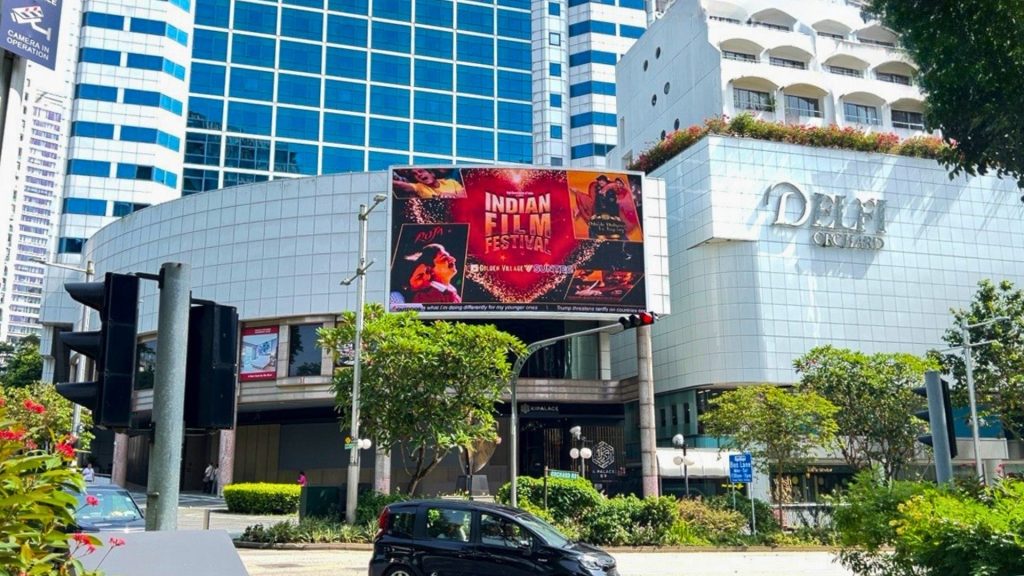
The Indian Film Festival 2026 was promoted through a carefully structured OOH rollout designed to balance reach and frequency – this includes multiple malls from the city centre such as Orchard Road, to networked large digital screens across the Singapore incl. at 10 Square, 10sq, the Landmark of Good in Singapore. 

This approach enabled the festival to build early awareness while maintaining sustained visibility throughout the key festival period for 2 – 4 weeks. 

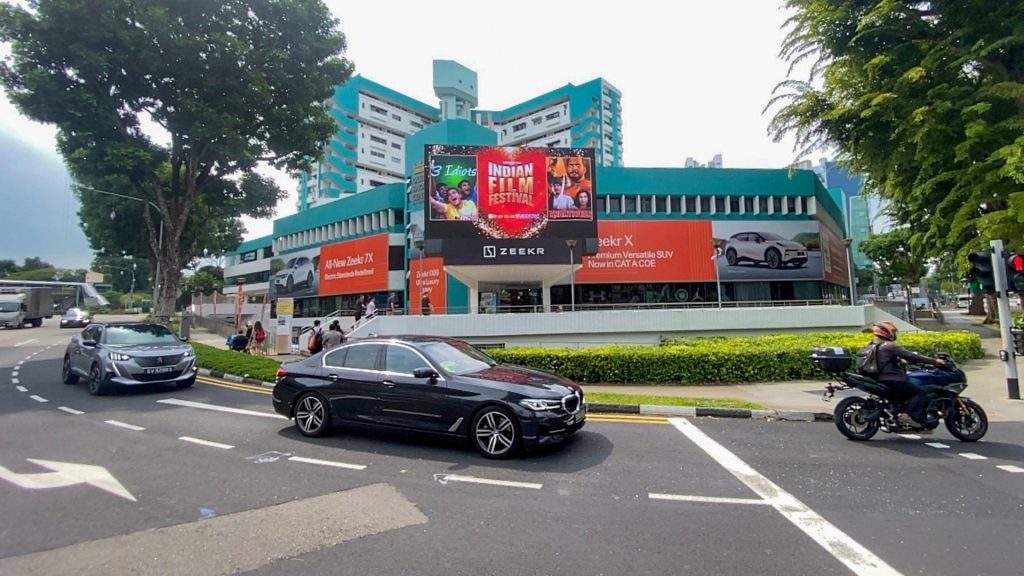
(Indian Film Festival at Ten Square, Singapore)

3 Key Reasons Why OOH Helps Indian Film Festivals Reach New Audiences

Indian cinema today stands on a global stage. With big-budget productions, world-class storytelling, advanced technology, and international recognition, Indian films are no longer confined to traditional Bollywood audiences. From mainstream successes like 3 Idiots to beloved classics such as Pyar Kiya Toh Darna Kya, and increasingly, festival-featured films that compete on international platforms, Indian cinema has proven its ability to engage audiences across cultures and generations.

With this second reintegration of the Indian Film Festival  in Singapore this year, this festival play a critical role in showcasing the community, the country and culture. However, to reach new audiences—especially those unfamiliar with the scale and quality of Indian films—festivals need visibility that goes beyond digital screens. This is where Out-of-Home (OOH) advertising delivers unmatched impact.


1. Unmatched Visibility and Broad Reach at City Scale

OOH advertising offers an always-on, unavoidable presence. It cannot be skipped, blocked, or ignored like digital ads. Instead, it places Indian cinema directly into the everyday lives of people moving through the city and near movie theatres

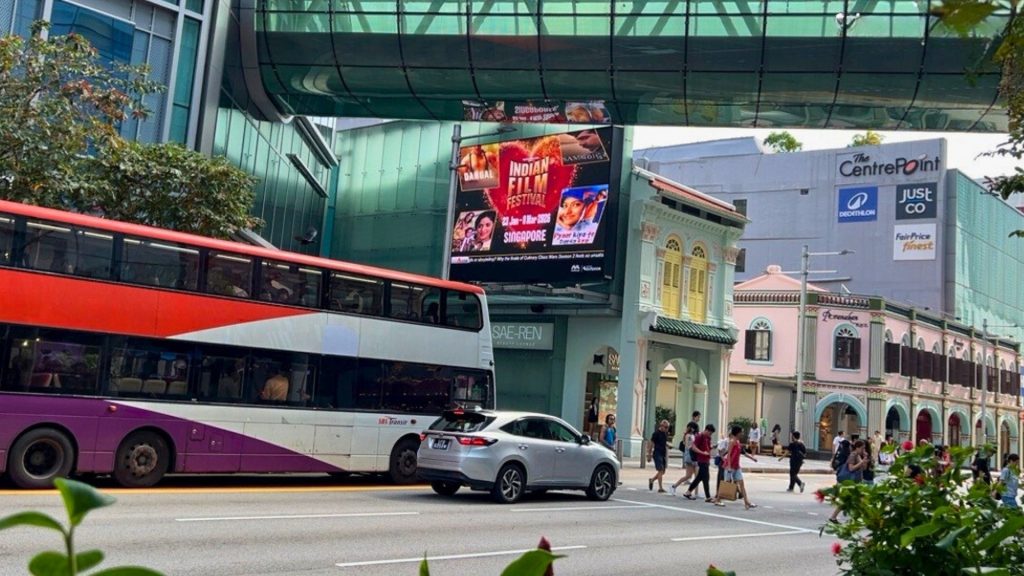
With placements across high-traffic urban environments—arterial roads such as at Queensway Shopping Centre/ Alexandra Road, buses and and business districts—OOH reaches millions of people repeatedly. This includes:

  • Casual moviegoers who know Indian films only through mainstream hits

  • Younger audiences discovering Indian cinema 

  • Culturally curious viewers open to high-quality, global storytelling

(Indian Film Festival at Orchard Hotel, Orchard Road, Singapore)

2. Strategic Targeting That Introduces Indian Cinema to New Audiences

While OOH delivers mass exposure, it is also highly strategic. Indian Film Festivals can carefully select locations that align with the audiences they want to attract.

Examples include:

  • Universities and youth hubs to reach younger, globally minded viewers

  • Premium retail and business districts to engage professionals with disposable income in Orchard Road, Eu Tong Sen etc 

  • Transit corridors to build frequency and anticipation such as near 10 Square.

With Digital Out-of-Home (DOOH), festivals can rotate messaging to spotlight:

  • Internationally acclaimed, award-winning Indian films

  • High-budget productions with global appeal

  • Recognizable titles that act as familiarity anchors, such as 3 Idiots, alongside newer festival selections

This approach helps reframe perceptions—showing audiences that Indian films today are technically sophisticated, narratively powerful, and competitive on the world stage.


3. High Brand Recall, Trust, and Cultural Authority

OOH consistently delivers high recall because it is large-scale, visual, and repeatedly encountered. For film festivals, recall translates directly into attendance.

More importantly, OOH builds trust and authority. A strong physical presence in premium locations signals that the festival—and the films it features—are:

  • Serious, established, and high quality

  • Culturally important

  • Worth time and attention

This is especially crucial when introducing audiences to Oscar-worthy Indian films that may be unfamiliar but are made with international standards of production, direction, and storytelling.

OOH acts as an “entry point” for new customers, forcing them to notice a brand in a positive, high-impact environment they cannot easily avoid.

For Indian Film Festivals, this entry point turns curiosity into confidence—and confidence into ticket purchases.

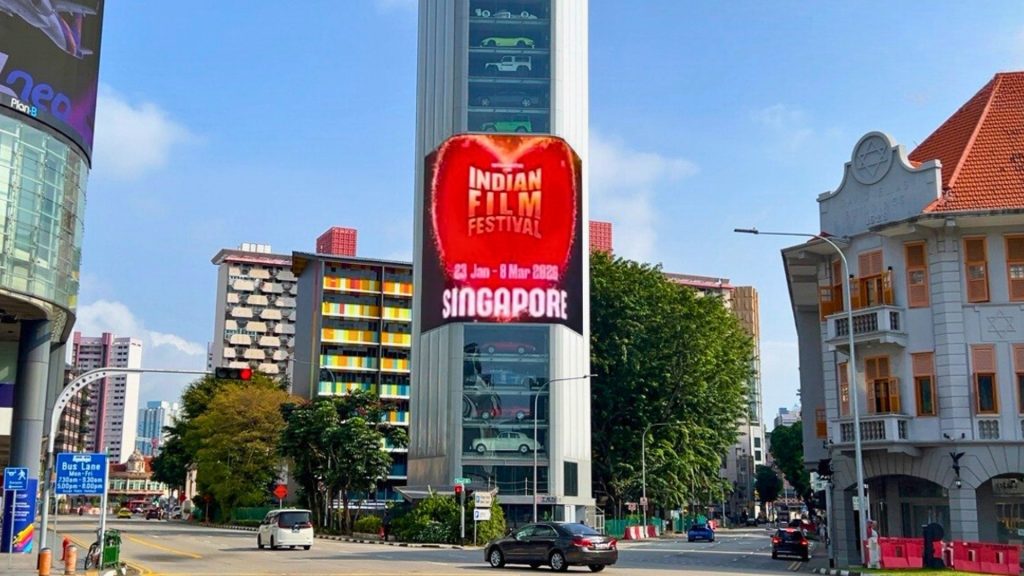
(Indian Film Festival at Orchard Gateway, Orchard Road, Singapore)

Conclusion: Turning City Visibility into Cultural Participation

As Indian cinema continues to gain global recognition for its scale, quality, and award-worthy excellence, Indian Film Festivals must meet audiences where they are—out in the city. With this second Indian Film Festival bigger and longer than 2025’s its continued success is here to stay for 2026 and beyond. 

In general Out of Home advertising enables festivals to:

  • Reach new and diverse audiences

  • Elevate the perception of the content – Indian films in this case 

  • Create city-wide excitement, credibility and transform into ticket sales. 

At The Perfect Media, we are a platform for events and festival clients interested to reach out for new audiences for cultural discovery


Quick Comparison: Why OOH Outperforms Digital Alone

Factor

Digital Ads

OOH Advertising

Ad Avoidance

High (skipped/blocked)

None

Visibility

Screen-dependent

Always visible

Credibility

Medium

High

Local Impact

Limited

Strong

Cultural Presence

Low

Very High + SHARED viewing


Frequently Asked Questions (FAQs)

1. Why is Outdoor Advertising effective for events and festivals?

Outdoor advertising creates mass visibility, cultural credibility, and city-wide buzz, making it ideal for promoting film festivals to new and diverse audiences.

2. Can OOH help attract younger audiences to Indian film festivals?

Yes. Transit media like buses, mall displays, and digital outdoor screens are highly effective in reaching young, urban audiences who are constantly on the move.

3. Is Outdoor Advertising expensive for event promotion?

OOH can be scaled based on budget. Strategic placement ensures high impact without overspending.

4. How does OOH support digital marketing campaigns?

OOH reinforces digital messaging, improves recall, and drives online searches and ticket bookings.

5. What types of OOH media work best for film festivals?

Billboards, buses and outdoor digital screens and mall media  work especially well.


At The Perfect Media, we help festivals turn visibility into attendance and attention into sales. Contact us today!

Email: ask@tpmoutdoor.com

WhatsApp: (+65) 8812 0555

post1
post2
post3

Search

Feature Insights

THE PERFECT MEDIA OOH INSIGHTS

Get the latest update of our exclusive insights, and download them over here

FILL THE FORM TO DOWNLOAD