
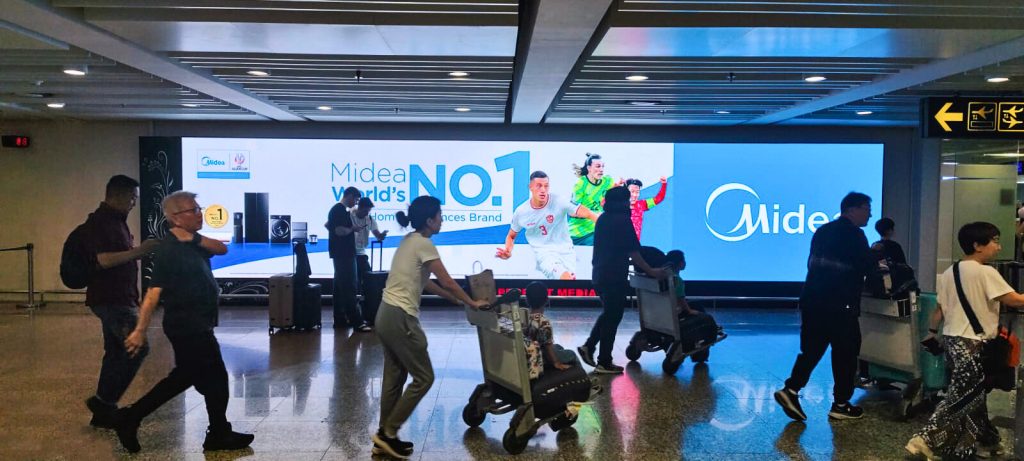
Airport advertising Southeast Asia continues to attract enterprise brands that prioritize audience quality, attention, and influence. Airports across the region combine time, focus, and purchasing power within a single environment. Travelers move with intent, engage with their surroundings, and interact with brands during moments of transition and decision formation.
Legendary advertiser David Ogilvy reminds us that “If it doesn’t sell, it isn’t creative,” reinforcing the fundamental role of advertising in delivering measurable impact, not just visibility. (Ogilvy on Advertising, 1983)
Across Southeast Asia, airports function as regional gateways for business leaders, high-net-worth individuals, and international consumers. The World Out of Home Organization (WOO) positions airport OOH as a premium channel that delivers visibility, trust, and authority. Nielsen data confirms that airport advertising generates strong brand recall through extended dwell time and repeated exposure across multiple touchpoints.
In 2026, airport advertising stands as a premium environment where brands convert visibility into influence at scale.
Understanding the Airport Audience in Southeast Asia

Effective airport advertising strategy begins with audience intelligence. Southeast Asian airports attract a high-value mix of travelers who influence markets, industries, and purchasing ecosystems.Business travelers dominate weekday traffic and premium lounges. These audiences include senior professionals, enterprise leaders, and C-suite executives with strategic purchasing authority.
Leisure travelers contribute scale and volume, particularly during peak travel seasons. Regional and international passengers bring strong spending power and openness to brand discovery within retail, luxury, and lifestyle categories.
As Byron Sharp teaches, “Market growth comes from increasing mental availability,” not merely from targeted frequency alone. (How Brands Grow, 2010)
Kantar research highlights that airport audiences concentrate within higher income brackets, senior professional roles, and globally connected communities. Brands that activate airport environments align naturally with ambition, success, and credibility.
Why Airport Advertising Delivers High Brand Recall
Airport advertising delivers strong recall through three core drivers: time, repetition, and context. Travelers spend extended periods within terminals, lounges, and transit zones. This dwell time allows brand messages to register clearly without competing distractions. Repeated exposure across departure, transit, and arrival reinforces memory and recognition throughout the journey.
Unlike many media environments, airports convey signals of trust, safety, and international relevance. Brands displayed in this setting benefit from positive association, strengthening perception and credibility.
Industry research consistently shows that OOH formats placed in premium, high-attention environments generate higher recall and stronger long-term brand impact. Airports exemplify this effect across Southeast Asia’s most influential travel hubs.
Key Airport Advertising Formats Explained
Airport advertising formats support different strategic objectives within a campaign.
Digital screens and DOOH networks enable dynamic messaging, high frequency, and flexible storytelling across terminals. Brands use these formats to adapt content by time of day, audience flow, or campaign phase.
Large-format static displays deliver visual authority. Positioned in high-traffic areas, these formats anchor brand presence and reinforce leadership.
Jet bridge, baggage claim, and terminal domination placements capture attention during moments of low distraction and high dwell, allowing messages to resonate clearly.
Experiential and immersive activations create emotional engagement and memorability. These formats work particularly well for luxury, automotive, technology, and lifestyle brands seeking differentiation.
Each format contributes to a layered strategy that balances reach, impact, and brand depth.
Major Airport Hubs in Southeast Asia Brands Should Know

Selecting the right airport shapes campaign effectiveness, brand perception, and regional authority. Each major hub in Southeast Asia delivers a distinct audience profile, travel behavior, and commercial opportunity. Strategic airport advertising aligns brand objectives with these contextual strengths.
Singapore Changi Airport stands as Southeast Asia’s most premium aviation hub. The airport attracts senior business leaders, regional executives, and high-income international travelers with strong purchasing authority. High dwell time, seamless passenger flow, and world-class terminal design position brands within an environment of trust, innovation, and global leadership.
Bangkok Suvarnabhumi Airport functions as a high-volume international gateway connecting business travel with luxury tourism. The airport reaches a broad mix of regional professionals, long-haul travelers, and affluent leisure audiences. Brands benefit from scale combined with strong exposure during extended transit and departure periods.
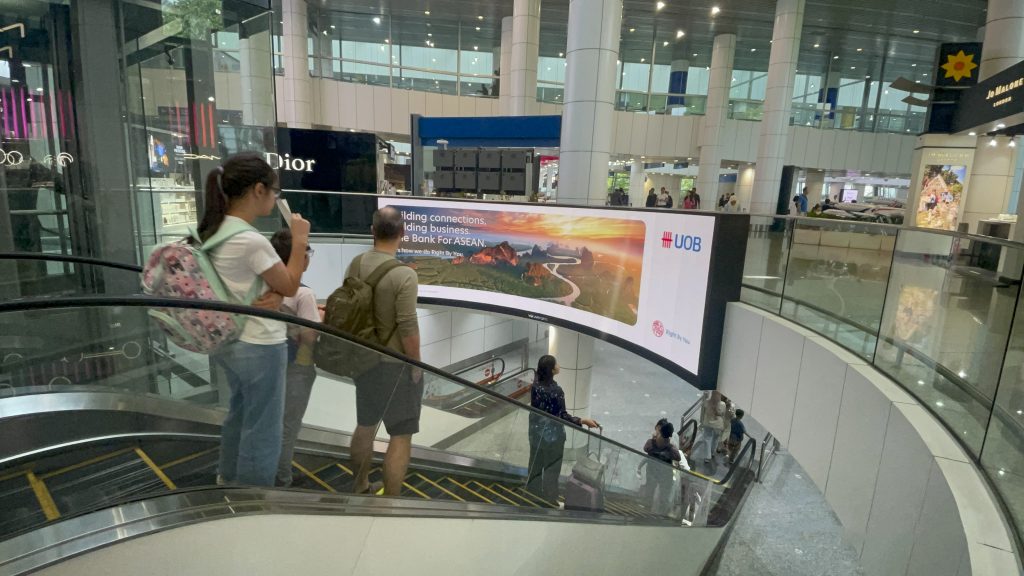
Kuala Lumpur International Airport (KLIA) operates as a strategic transit hub linking Southeast Asia with Europe, the Middle East, and East Asia. The airport delivers consistent access to multinational travelers, corporate decision authorities, and regional connectors, making it highly effective for brands building cross-market visibility.
Learn more in our related blog articles “How Airport Advertising Elevates Brand Visibility and Engagement“
Jakarta Soekarno–Hatta International Airport serves one of Asia’s largest outbound and domestic travel populations. The airport reaches senior professionals, enterprise stakeholders, and high-frequency business travelers from Indonesia’s economic centers. High passenger volume and repeat exposure strengthen brand familiarity and regional dominance.
Learn more in our related blog articles “Soekarno–Hatta International Airport“
Vietnam: Tan Son Nhat International Airport (Ho Chi Minh City) connects brands with Vietnam’s fastest-growing commercial hub. The airport attracts corporate leaders, manufacturing executives, and regional investors, reflecting the country’s expanding role in global supply chains and regional business growth.
Learn more in our related blog articles “Tan Son Nhat Airport“
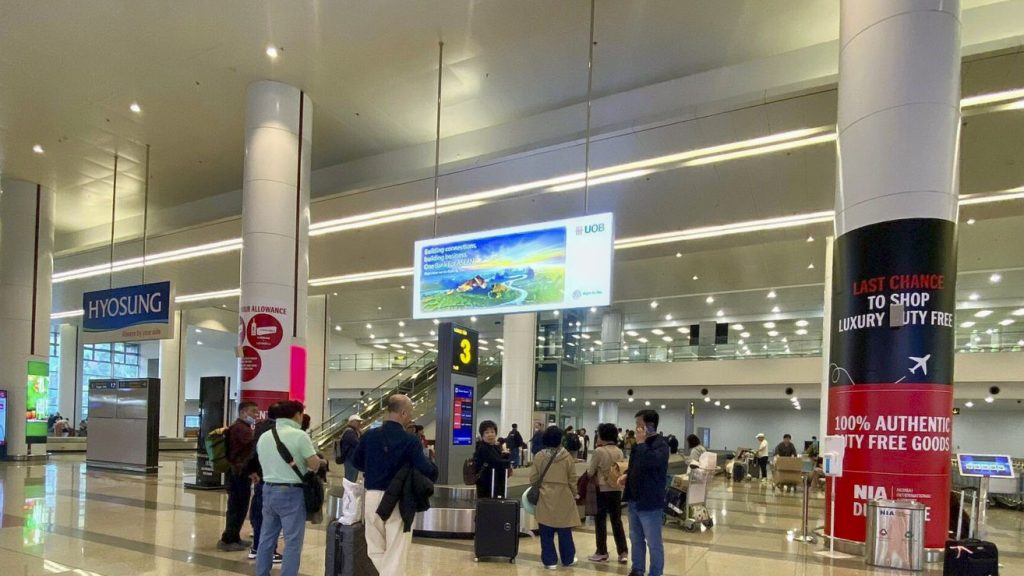
Vietnam: Noi Bai International Airport (Hanoi) delivers access to government, policy, technology, and enterprise audiences. The airport plays a key role for brands targeting institutional credibility, national decision influence, and long-term market positioning in Northern Vietnam.
Learn more in our related blog articles “Maximizing Brand Exposure at Noi Bai Airport“
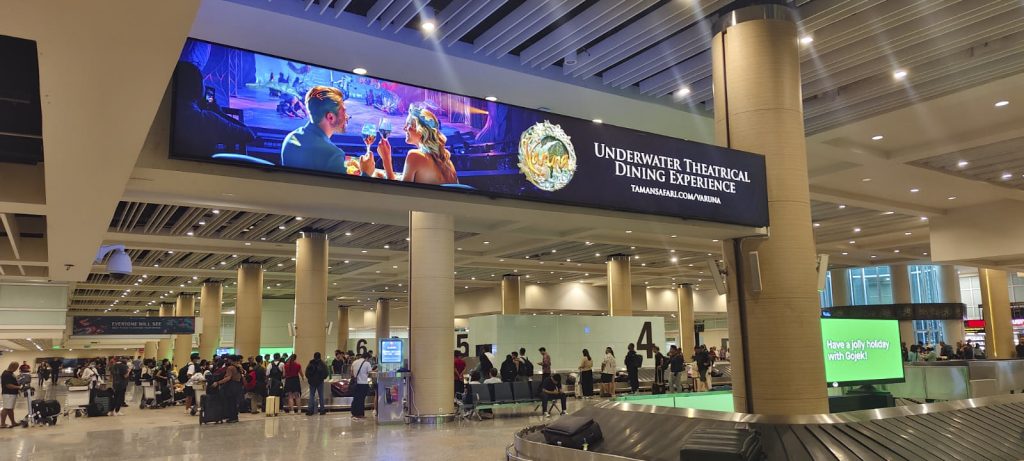
Bali Ngurah Rai International Airport offers a premium gateway to high-spending international leisure travelers, luxury consumers, and lifestyle-focused audiences. Brands in hospitality, fashion, travel, wellness, and premium services leverage Bali’s airport to align with aspiration, experience, and global desirability.
Learn more in our related blog articles “Bali Airport Advertising”
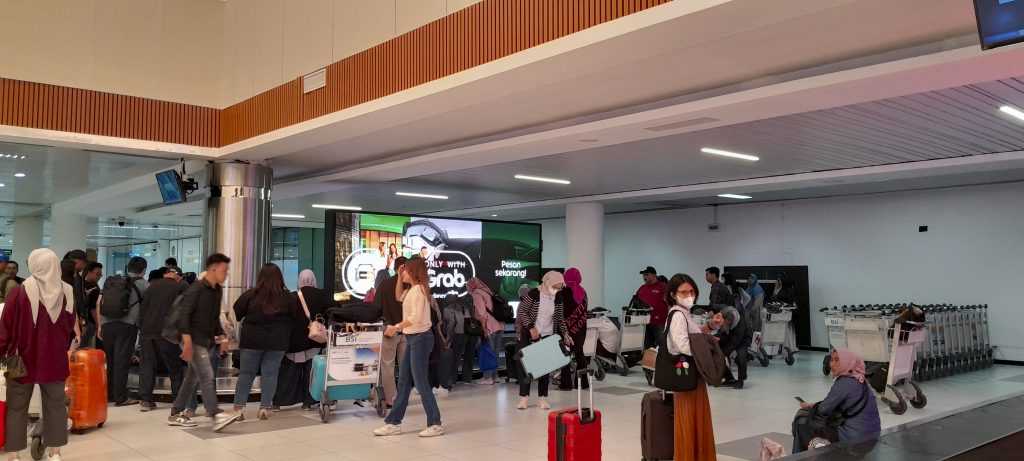
Batam Hang Nadim International Airport connects Indonesia with Singapore and regional manufacturing corridors. The airport reaches cross-border business travelers, industrial stakeholders, and professionals operating within Singapore–Indonesia economic ecosystems. This environment supports brands focused on B2B connectivity, logistics, and regional trade.
Learn more in our related blog articles “Batam International Airport”
Medan Kualanamu International Airport serves as a strategic gateway to Western Indonesia and the Greater Sumatra economic corridor. The airport attracts corporate leaders, plantation and resource-sector executives, regional traders, and cross-border travelers connecting Indonesia with Malaysia and South Asia. Brands gain exposure to commercially influential audiences within logistics, agribusiness, manufacturing, and regional trade networks.
Learn more in our related blog articles “Advertise at Medan International Airport”
Sri Lanka Bandaranaike International Airport (Colombo) positions brands at a strategic South Asia crossroads. The airport attracts international business travelers, diaspora professionals, and regional connectors linking Southeast Asia, the Middle East, and South Asia. Brands benefit from early visibility in a market experiencing renewed regional integration.
Learn more in our related blog articles “The Potential of Airport Advertising in Sri Lanka“
Presence across these airports enables brands to build regional consistency, market-specific relevance, and enterprise-level visibility across Southeast Asia and its extended economic corridors.
How Brands Use Airport Advertising for Different Objectives
Brands activate airport advertising to support a wide range of strategic goals.For market entry and regional expansion, airports provide immediate visibility and legitimacy. New launches gain scale quickly, while established brands reinforce leadership across borders.
Luxury and premium brands leverage airports to strengthen aspiration, exclusivity, and global relevance. The airport environment naturally aligns with success, mobility, and status.
Finance, technology, aviation, and healthcare brands use airport advertising to build trust among senior professionals and enterprise stakeholders. Consistent exposure in credible environments reinforces reliability and long-term value. Each objective benefits from precise format selection, location strategy, and message alignment.
Integrating Airport Advertising With Digital Campaigns
Airport advertising performs strongest when integrated into broader digital ecosystems. Travelers remain highly connected during journeys. Exposure to airport OOH stimulates mobile search, social engagement, and content interaction in real time. Brands use this moment to bridge physical visibility with digital action.
Geo-based retargeting, travel-segment audiences, and post-journey engagement extend campaign impact beyond the airport. This integration transforms awareness into measurable performance across digital channels. By aligning airport advertising with digital strategy, brands create continuity across the entire customer journey.
Airport Advertising Costs and ROI Considerations in 2026
Airport advertising investment reflects premium location, format quality, and audience value. Costs vary based on terminal positioning, screen size, duration, and regional coverage.
Brands assess ROI beyond impressions alone. Exposure quality, recall strength, brand lift, and long-term equity play central roles in evaluation. Premium environments consistently deliver stronger brand outcomes over time. Strategic planning ensures that investment translates into sustained visibility, credibility, and commercial influence.
When Airport Advertising Delivers the Strongest Results
Timing enhances airport advertising performance. Peak travel seasons, major holidays, and regional events increase passenger volume and attention. Campaigns aligned with these periods benefit from amplified reach and engagement.
Airport advertising also supports new route launches, regional expansion, and corporate milestones. Coordinated timing across multiple airports strengthens consistency and market impact. Strategic scheduling ensures that brands connect with travelers during moments of heightened awareness and receptivity.
Choosing the Right Airport Advertising Partner in Southeast Asia
Successful airport advertising requires experienced partnership. Strong partners provide regional network access, strategic planning, and creative adaptation tailored to each airport environment. Execution consistency across markets ensures message clarity and brand alignment.
Post-campaign evaluation and insight-driven optimization support continuous improvement and long-term value creation.
The Perfect Media supports brands across Southeast Asia with premium airport advertising solutions, combining regional reach, strategic planning, and omnichannel integration to deliver measurable brand growth.
Connect With High-Value Travelers Where Attention Is Guaranteed
Airport advertising enables brands to engage premium audiences at moments of high attention and influence.
If you are planning airport advertising campaigns across Southeast Asia, the right partner ensures scale, consistency, and impact.


